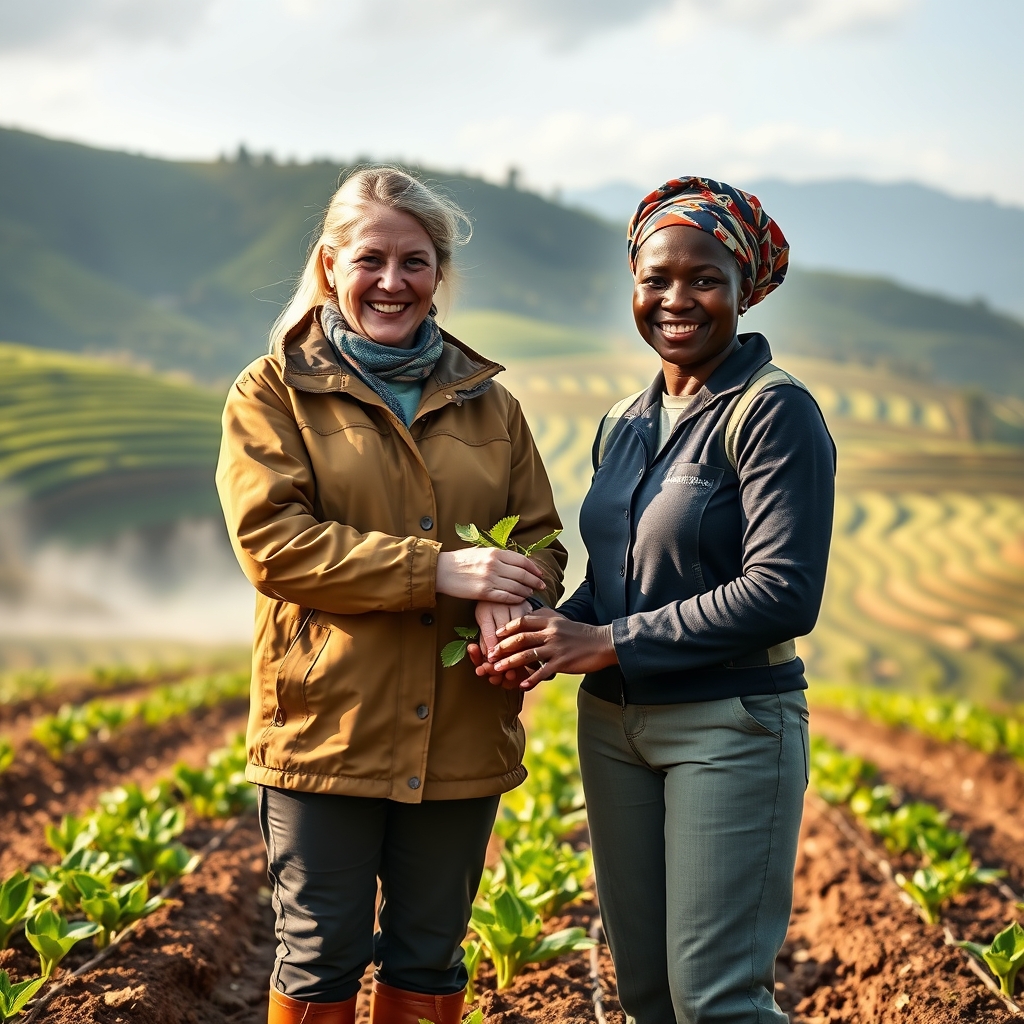
Imagine facing the unpredictable fury of nature, your livelihood hanging in the balance, day after day. For women farmers climate change isn’t a distant headline; it’s a daily reality shaping their fields, families, and futures. Yet, amidst these immense challenges, a powerful movement is blossoming: one of solidarity, shared knowledge, and unwavering resilience. Across continents, from the verdant fields of Northern Ireland to the fertile lands of Rwanda, female agriculturalists are forging connections, proving that while climate impacts may vary, the spirit to overcome them is universally strong.
This remarkable cross-cultural exchange highlights a fundamental truth: the fight for sustainable agriculture is a global one. By sharing their unique experiences and insights, these dedicated women are not only building personal friendships but also laying the groundwork for more robust, community-led solutions to environmental shifts. Their stories offer a powerful testament to the strength found in unity, demonstrating how local actions can have far-reaching impacts in the face of a changing climate.
Bridging Continents: The Shared Struggle of Women Farmers Against Climate Change
Despite thousands of miles separating them, women farmers in Northern Ireland and Rwanda encounter strikingly similar adversities due to global warming. Both regions, while geographically and climatically distinct, are experiencing significant shifts in weather patterns that directly threaten agricultural stability. Understanding these parallel struggles is crucial to appreciating the value of their shared dialogue.
Northern Ireland’s Agricultural Landscape and Climate Shifts
In Northern Ireland, farmers are grappling with increasingly unpredictable weather. Traditional farming calendars are being disrupted by more intense rainfall, leading to waterlogged fields and delayed planting seasons. Conversely, periods of unexpected drought are also becoming more frequent, stressing crops and livestock alike.
These fluctuations impact everything from grass growth for dairy and beef production to the viability of arable crops. Farmers are forced to adapt rapidly, often with limited resources, to protect their yields and ensure the continuity of their family businesses. The long-term sustainability of their practices is under constant review as they navigate these new climatic realities.
Rwandan Farmers on the Frontlines of Environmental Change
Meanwhile, in Rwanda, a nation heavily reliant on rain-fed agriculture, the effects of climate change are particularly acute. Farmers face increasingly severe droughts that decimate harvests, alongside torrential downpours leading to devastating floods and soil erosion.
These extreme weather events directly threaten food security and the livelihoods of millions. Many Rwandan farmers, predominantly women, are working on small plots of land, making them especially vulnerable to even minor climatic disturbances. Their resilience is tested daily as they strive to feed their families and communities amidst escalating environmental pressures.
Cultivating Resilience: Learning from Each Other’s Adaptations
It is precisely these shared challenges that have sparked a powerful desire for collaboration. The exchange between women farmers from Northern Ireland and Rwanda offers a unique platform for learning and innovation, transcending geographical boundaries. They are discovering that while the specific manifestations of climate change differ, many underlying solutions and adaptive strategies hold universal value.
Innovative Practices from Diverse Climates
The dialogue allows for the sharing of practical, on-the-ground solutions. For instance, Rwandan farmers might share insights into drought-resistant crop varieties or efficient water harvesting techniques that could be adapted for Northern Ireland’s dry spells. Conversely, Northern Irish farmers might offer perspectives on managing saturated soils or sustainable livestock practices that could benefit Rwandan communities.
This cross-pollination of ideas fosters innovation, encouraging farmers to look beyond conventional methods. It highlights that solutions don’t always come from scientific labs but often emerge from generations of practical experience and ingenuity within farming communities themselves. Each shared tip or technique contributes to a collective toolkit for climate adaptation.
The Power of Peer Support and Friendship
Beyond practical farming techniques, the connection forged between these women farmers underscores the immense power of peer support. Facing environmental adversity can be isolating, but knowing there are others across the globe experiencing similar struggles and finding ways to cope instills hope and strengthens resolve. The friendship built between them provides emotional and psychological resilience.
This network of support transforms individual struggles into a collective endeavor. It empowers women to feel less alone in their fight, fostering a sense of global community and shared purpose. Such bonds are invaluable in sustaining motivation and encouraging continuous adaptation in the face of ongoing climate impacts.
Beyond the Farm: Empowering Women in Environmental Stewardship
The impact of these collaborations extends far beyond individual farms. When women farmers unite, they amplify their voices and influence, becoming powerful advocates for broader environmental stewardship and policy changes. Their collective experience offers invaluable insights into effective, ground-up approaches to climate action.
Strengthening Local and Global Food Systems
By sharing knowledge and building resilience, these women are directly contributing to stronger, more stable food systems. Locally, their adapted practices lead to more reliable harvests, enhancing food security for their communities. Globally, their example inspires others to adopt similar collaborative models, fostering a more interconnected and robust agricultural network.
Empowering women in agriculture is a proven strategy for improving food outcomes worldwide. Their unique understanding of land, resources, and community needs makes them central to developing sustainable and equitable food production models. Their efforts resonate far beyond their own fields, creating ripples of positive change.
A Unified Voice for Sustainable Agriculture
When women farmers from diverse backgrounds come together, they create a formidable force for change. Their shared stories and experiences can inform policymakers, influence agricultural research, and raise public awareness about the urgent need for climate-resilient farming practices. They provide a vital, unified voice that champions sustainable agriculture on both local and international stages.
Their collaboration demonstrates that addressing climate change requires both global cooperation and local action, with women often at the forefront. By continuing to share, learn, and support one another, these remarkable women farmers are not just adapting to a changing world; they are actively shaping a more sustainable and equitable future for all.