
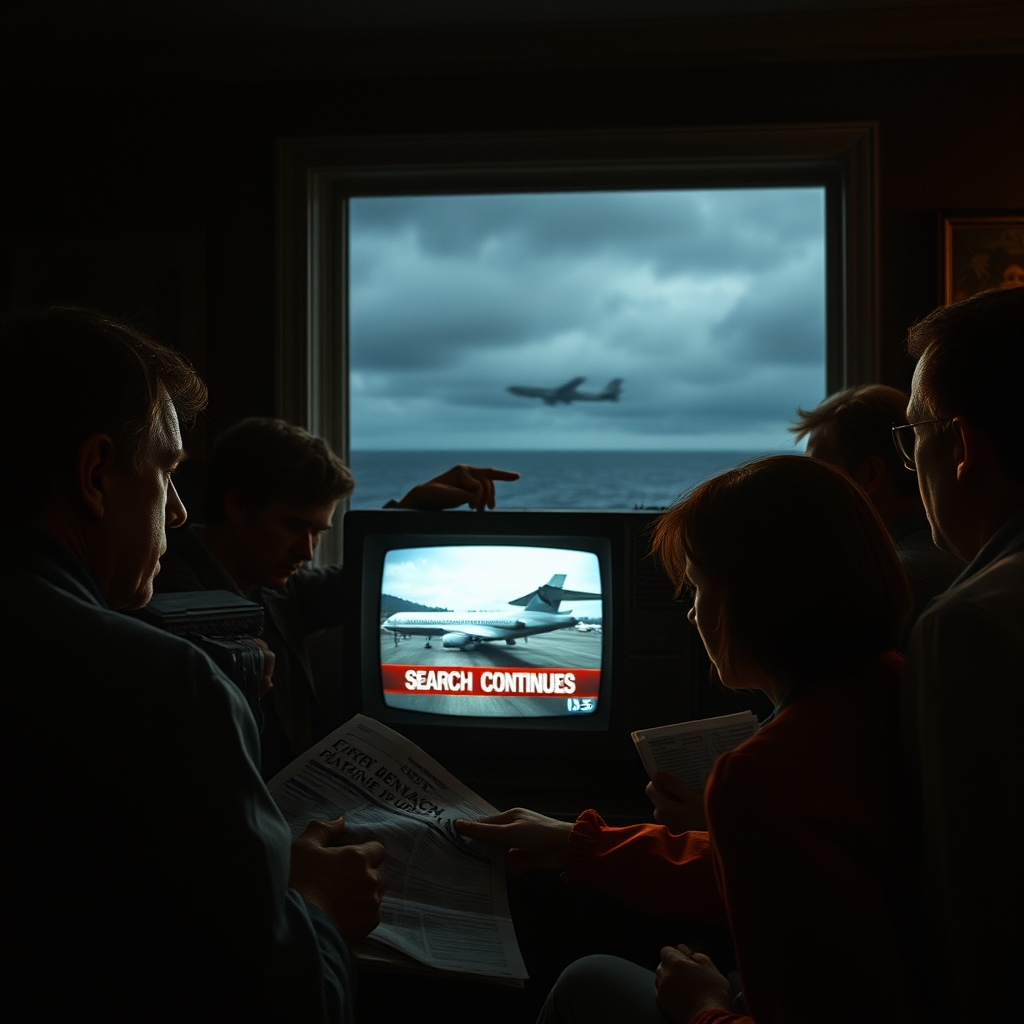
Ah, the enduring spectacle of American tragedy, particularly when it comes wrapped in a meticulously tailored suit and a famous surname. Before reality television perfected the art of public grieving, there was the genuine, unscripted drama of the Kennedy family, perpetually offering fresh material for our collective morbid fascination. The news of JFK Jr.’s fatal plane crash wasn’t just a headline; it was a national event, a week-long live broadcast of a search-and-rescue operation that felt less like journalism and more like a macabre prime-time special.
Indeed, for those of us old enough to remember, the summer of 1999 wasn’t just hot; it was saturated with the relentless hum of news choppers and the solemn pronouncements of anchors. The search for the missing Piper Saratoga carrying John F. Kennedy Jr., his wife Carolyn Bessette Kennedy, and her sister Lauren was less an investigation and more a national vigil, played out in agonizing real-time across every available screen. One might even argue it was the original binge-watch, only without the comforting “skip intro” button.
The Unforgettable Media Circus Surrounding JFK Jr.’s Fatal Plane Crash
Journalists, veterans of countless crises, found themselves immersed in an an unprecedented media maelstrom. The lines between reporting facts and feeding the public’s insatiable appetite for every whispered rumor blurred into oblivion. It was a masterclass in how to turn a personal catastrophe into a communal, albeit deeply unsettling, experience.
Every tidbit, every speculative theory, every grainy image of the ocean surface became grist for the 24/7 news mill. The sheer volume of coverage created an almost hypnotic effect, drawing millions into a shared experience of suspense and eventual sorrow. It was a defining moment for modern news, showcasing both its power and its potential for overwhelming intrusion.
Beyond the Headlines: The Human Cost of the Kennedy Tragedy
Yet, amidst the cacophony of speculation and the endless replays of old Kennedy footage, there were actual human beings grappling with unimaginable loss. The families of JFK Jr. and Carolyn Bessette Kennedy weren’t just characters in a grand, tragic narrative; they were people enduring the most profound grief imaginable, under the harshest possible spotlight. Their private sorrow became public property, dissected and analyzed by millions.
It’s easy to forget, when a dynasty so steeped in myth suffers another blow, that the individuals involved are not merely symbols. Carolyn, in particular, often reduced to a fashion icon, was a person with her own life, dreams, and relationships, all extinguished in a moment. The sheer weight of public expectation and intrusive scrutiny must have been a burden almost as heavy as the grief itself.
The Enduring Allure of the Camelot Myth
But then, why does this particular tragedy, among so many others, continue to exert such a powerful grip on the public imagination? Perhaps it’s the enduring allure of the ‘Camelot myth,’ a narrative of youth, glamour, and unfulfilled promise that has always clung to the Kennedy name. Every fresh misfortune seems to reinforce the idea of a cursed dynasty, fated for greatness and shadowed by doom.
JFK Jr. himself embodied the last vestiges of this romanticized era, a handsome prince who seemed destined for something, though what, exactly, was always deliciously vague. His sudden departure felt like the definitive end of an era, a final, heartbreaking chapter in a story we all thought we knew. It was less a death, and more the dramatic cancellation of a beloved series.
When History Becomes Entertainment: Ryan Murphy’s Portrayal
Fast forward to today, and we find ourselves with television series like Ryan Murphy’s latest foray into the Kennedy saga, dutifully re-enacting the very events that once consumed our news cycles. It’s a curious feedback loop: history becomes news, news becomes memory, and memory, inevitably, becomes prestige television. One has to wonder if the journalists who lived through the raw immediacy of that week feel a peculiar sense of déjà vu, watching actors portray their very real anguish and tireless reporting.
These dramatizations, while often compelling, invariably sanitize the messiness of real grief and the relentless pressure of a 24/7 news operation. They offer a polished, palatable version of events, allowing us to re-experience the tragedy without the true discomfort of its original broadcast. It’s tragedy-lite, perfectly portioned for modern consumption, designed to evoke emotion without demanding too much introspection.
Ultimately, while the media continues to repackage and resell the indelible images of that summer, the true gravity of JFK Jr.’s fatal plane crash remains unchanged. It serves as a stark reminder that beneath the layers of celebrity, political intrigue, and historical myth-making, there are always real lives, real families, and real sorrow. Perhaps, instead of merely consuming these stories as entertainment, we might occasionally pause to consider the profound human cost. The next time a similar spectacle unfolds, we might choose to remember the people, not just the pixels, and perhaps even grant them a modicum of the privacy so brutally denied to the Kennedys.