{
“aigenerated_title”: “Echoes of Eternity: Navigating Access and Faith in Jerusalem’s Sacred Heart”,
“aigenerated_content”: “
Jerusalem, a city unlike any other, pulses with the heartbeat of millennia of faith. Its ancient stones whisper stories of prophets, kings, and countless pilgrims who have journeyed across continents, drawn by an irresistible spiritual magnet. This profound allure, however, is often intertwined with complex realities, particularly concerning the access and management of its revered holy sites. Recently, international attention has once again focused on this delicate balance, with the United States expressing concern over recent closures, underscoring the perpetual challenge of safeguarding religious freedom amidst geopolitical sensitivities.
n
The city’s unique position as a sacred nexus for three Abrahamic religions imbues it with an unparalleled spiritual significance, yet also makes it a crucible of competing claims and profound emotional attachments. Every stone, every alleyway, every venerated structure carries layers of history and meaning, making any disruption to the status quo a matter of international concern. Understanding the intricate tapestry of faith, history, and politics that defines Jerusalem is essential to appreciating the gravity of its challenges.
nnn
For countless generations, Jerusalem has stood as the spiritual epicenter for billions across the globe. It is a city where the divine is believed to have touched the earth, leaving behind an indelible mark on human consciousness. Its sacred spaces are not mere historical relics; they are living, breathing centers of worship, pilgrimage, and profound identity.
n
The very air in Jerusalem feels charged with centuries of devotion, a testament to its enduring power. This spiritual pull transcends borders and cultures, drawing adherents of Judaism, Christianity, and Islam into its ancient embrace. Each faith finds its foundational narratives deeply embedded within the city’s topography, making its preservation and accessibility paramount.
nn
A Nexus for Three Abrahamic Religions
n
Jerusalem holds an unparalleled position as a holy city for Judaism, Christianity, and Islam. This shared, yet distinct, reverence creates a unique spiritual landscape found nowhere else on earth. The city is a microcosm of human faith, a testament to the enduring quest for meaning and connection to the divine.
n
For Jews, it is Zion, the eternal capital, where the First and Second Temples once stood. Christians revere it as the place of Jesus’s crucifixion, resurrection, and ascension. Muslims hold it sacred as the site of Prophet Muhammad’s miraculous night journey and ascension to heaven.
nn
The Western Wall: A Symbol of Enduring Hope
n
The Western Wall, or Kotel, stands as one of Judaism’s holiest sites, a remnant of the retaining wall of the Second Temple complex. It is a place of fervent prayer, where millions have come to connect with their heritage and express their deepest hopes and sorrows. Its ancient stones bear witness to centuries of Jewish yearning and resilience.
n
The plaza before the Wall is a vibrant scene of devotion, with worshippers placing written prayers into its crevices. For many, it represents an unbroken chain of tradition, a tangible link to their ancestors and their spiritual heartland. Access to this sacred space is fundamental to Jewish religious life.
nn
The Dome of the Rock and Al-Aqsa Mosque: Islam’s Third Holiest Site
n
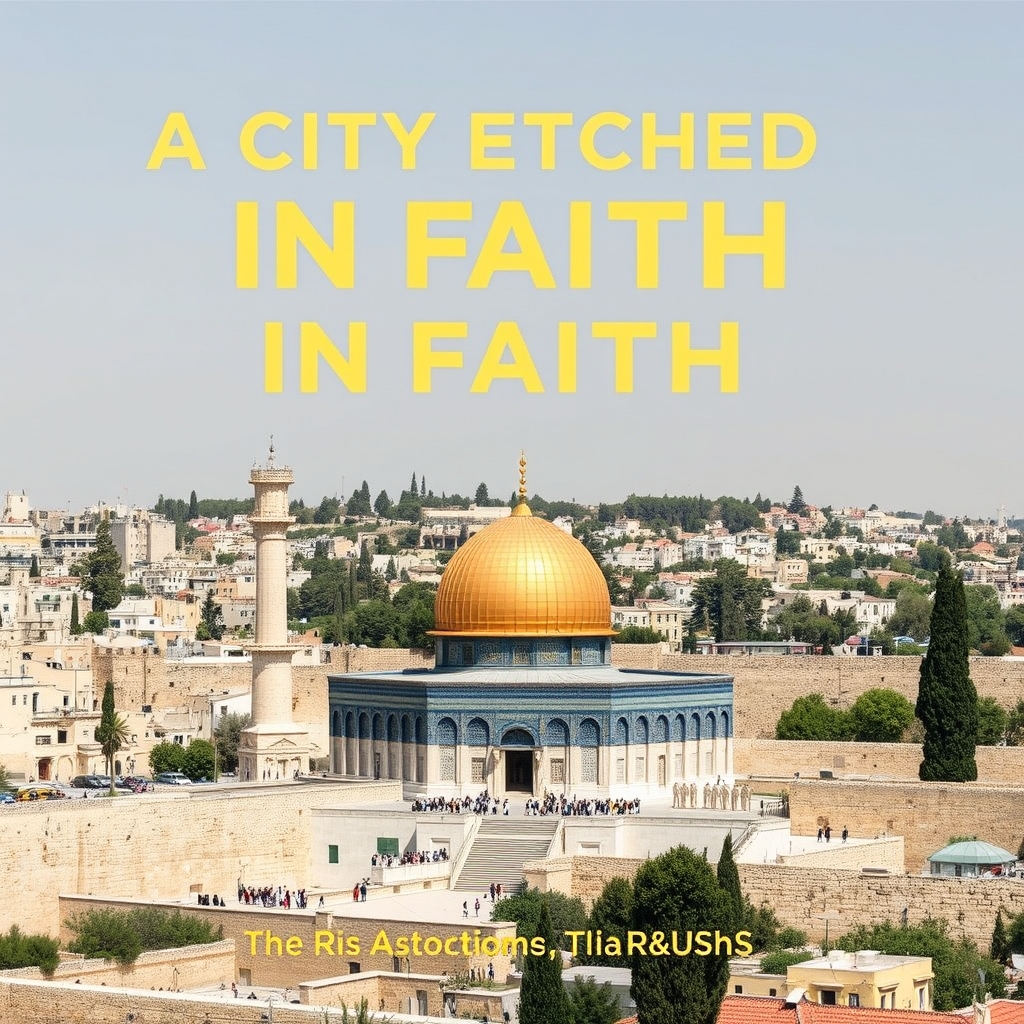
Perched atop the Haram al-Sharif, known to Jews as the Temple Mount, stands the majestic Dome of the Rock and the Al-Aqsa Mosque. These structures constitute Islam’s third holiest site, a place of immense spiritual gravity and architectural splendor. It is here that Muslims believe Prophet Muhammad ascended to heaven.
n
The entire compound is a vast area of prayer, study, and community life for Muslims worldwide. Its sanctity is deeply ingrained in Islamic tradition, and its preservation and accessibility are considered fundamental religious duties. The intricate history and multiple layers of significance make it a highly sensitive area.
nn
The Church of the Holy Sepulchre: Christianity’s Sacred Ground
n
Within the labyrinthine alleys of the Christian Quarter lies the Church of the Holy Sepulchre, revered by many Christians as the site of Jesus’s crucifixion, burial, and resurrection. It is the ultimate destination for countless Christian pilgrims, a place where faith converges with history in a profoundly moving way.
n
The church complex houses several chapels and shrines, each managed by different Christian denominations under a delicate arrangement known as the Status Quo. This ancient agreement governs everything from cleaning schedules to processional routes, highlighting the intricate interfaith dynamics within Jerusalem. The ability to visit and worship within its walls is central to Christian pilgrimage.
nn
The Shifting Sands of Control: A Historical Overview
n
Imagine Jerusalem through the ages, a city constantly coveted, conquered, and rebuilt by successive empires. Its history is a tumultuous narrative of shifting allegiances and profound cultural imprints. Understanding this long, complex history is crucial to grasping the contemporary challenges surrounding its holy sites.
n
From the Roman legions to the Ottoman sultans, each ruler left their mark, but none could diminish the city’s spiritual essence. The layers of occupation and governance have created a unique tapestry of legal and customary arrangements that continue to shape daily life and access to sacred spaces.
nn
From Empires to Mandates: A Legacy of Contention
n
Jerusalem’s saga of control stretches back millennia, encompassing periods under Jewish kingdoms, Roman rule, Byzantine emperors, Islamic caliphates, Crusader states, and the vast Ottoman Empire. Each era brought new custodians and new challenges to the city’s diverse populations and their holy places.
n
The fall of the Ottoman Empire after World War I ushered in the British Mandate for Palestine, which sought to navigate the complex religious and political claims. The Mandate period, though relatively brief, laid some groundwork for future conflicts and attempts at internationalizing the city, setting the stage for the modern era’s dilemmas.
nn
The Post-1967 Landscape and the Status Quo
n
The 1967 Six-Day War dramatically altered Jerusalem’s geopolitical landscape, bringing East Jerusalem, including the Old City and its holy sites, under Israeli control. This pivotal moment led to the reaffirmation and reinterpretation of the ‘Status Quo’ arrangement, a set of understandings governing the holy sites that largely dates back to Ottoman times.
n
The Status Quo is a fragile framework, an intricate web of agreements and traditions designed to prevent friction between religious communities and maintain access where possible. It dictates who has authority over which sites, when and how religious rituals can be performed, and even mundane matters like maintenance. Any perceived deviation from this delicate balance can ignite widespread tensions.
nn
The Waqf and Custodianship: Layers of Authority
n
A crucial element of the Status Quo, particularly concerning the Haram al-Sharif / Temple Mount, is the role of the Jerusalem Islamic Waqf. This Jordanian-appointed Islamic trust serves as the custodian of the Muslim holy sites within the compound, managing its daily affairs, maintenance, and access for Muslim worshippers.
n
While Israel maintains overall security control in East Jerusalem, including the Old City, it generally respects the Waqf’s administrative authority over the Muslim holy sites. This dual layer of control, however, is a frequent source of contention and misunderstanding, requiring constant communication and negotiation to prevent escalation.
nn
The Delicate Dance of Access: Navigating Religious Freedoms and Security Concerns
n
At the heart of many of Jerusalem’s tensions lies the perpetual struggle to balance religious freedom with security imperatives. The sheer density of sacred spaces, often in close proximity, within the Old City creates an environment where a single incident can quickly reverberate through multiple communities. This makes the management of access an incredibly sensitive and often contested issue.
n
When authorities decide to restrict access to certain holy sites, it invariably triggers strong reactions, raising questions about fundamental rights and perceived discrimination. These decisions, while often framed through a security lens, carry deep emotional and spiritual weight for those affected, challenging the very essence of their faith practices.
nn
The Rationale Behind Restrictions: Security Imperatives
n
Authorities often cite security concerns as the primary justification for restricting access to Jerusalem’s holy sites. This can include intelligence about potential threats, crowd control during periods of heightened tension or large gatherings, or efforts to prevent clashes between different groups. The goal is to maintain public order and prevent violence.
n
These measures might involve limiting entry based on age, residency, or even specific religious identity, particularly during sensitive holidays or after periods of unrest. From the perspective of those imposing them, these restrictions are regrettable but necessary precautions to safeguard lives and prevent broader instability in a highly volatile region.
nn
The Human Cost: Impact on Worshipers and Pilgrims
n
While security concerns are valid, the impact of access restrictions on worshippers and pilgrims is profound and deeply personal. Being denied entry to a site central to one’s faith can be a source of immense frustration, anger, and spiritual distress. For many, pilgrimage or regular prayer at these sites is a fundamental expression of their religious identity.
n
Families might be separated, unable to attend religious ceremonies together, and individuals may miss significant holy days or rites of passage. These personal stories of thwarted devotion underscore the human cost of geopolitical tensions, transforming abstract policies into tangible barriers to spiritual fulfillment. The emotional toll of being unable to connect with one’s sacred heritage is immeasurable.
nn
Competing Narratives: Who Defines “Access”?
n
The concept of “access” itself is often a point of contention, with different communities holding varying interpretations of what constitutes religious freedom. For some, access means unrestricted entry for all, at all times, to all parts of the holy sites. For others, it involves maintaining specific historical rights and preventing any perceived changes to the Status Quo.
n
The narratives surrounding access are deeply intertwined with historical grievances, national aspirations, and religious doctrine. This clash of perspectives makes finding common ground incredibly challenging, as each side feels their fundamental rights and sacred traditions are at stake. The debate is rarely just about logistics; it’s about identity, sovereignty, and profound spiritual connection.
nn
International Voices and Diplomatic Pressures: The US Stance
n
Given Jerusalem’s global significance, events within its ancient walls rarely remain local. International actors, particularly major global powers, often find themselves drawn into the delicate balancing act of advocating for religious freedom while attempting to maintain regional stability. The recent expression of concern by the United States is a testament to this enduring international interest.
n
The White House’s statement highlights the broader geopolitical implications of access restrictions, underscoring that such actions can have ripple effects far beyond the immediate vicinity of the holy sites. Diplomacy, in this context, becomes a continuous, high-stakes endeavor, seeking to de-escalate tensions and protect universal principles.
nn
The White House’s Intervention: A Statement of Concern
n
When the White House raises concerns over the closure of Jerusalem’s holy sites, it sends a clear diplomatic signal. Such statements are not merely symbolic; they reflect a recognition of the potential for these issues to destabilize the region and undermine efforts towards peace. The US, as a key ally and mediator, often finds itself in a unique position to exert influence.
n
This intervention typically emphasizes the importance of upholding religious freedom for all faiths and maintaining the historical Status Quo. It serves as a reminder to all parties that actions taken in Jerusalem are watched closely by the international community, and that responsible stewardship of these sacred spaces is expected.
nn
Broader Geopolitical Implications: Regional Stability
n
Events at Jerusalem’s holy sites have a well-documented history of escalating into wider regional conflicts. Perceived threats to sacred spaces or restrictions on worship can ignite passions across the Middle East and beyond, mobilizing populations and drawing in various state and non-state actors. This makes the management of these sites a critical component of regional stability.
n
Diplomats and policymakers are acutely aware that even seemingly minor incidents can quickly spiral. Therefore, international pressure often aims to prevent such escalations, urging restraint and adherence to established norms. The geopolitical stakes are incredibly high, influencing alliances, peace processes, and the broader security architecture of the region.
nn
The Role of International Law and Human Rights
n
Beyond immediate security concerns, the debate over access to Jerusalem’s holy sites often invokes principles of international law and human rights. Treaties and declarations emphasize the right to freedom of religion and belief, which includes the right to worship in sacred places and to participate in religious rites.
n
International bodies like the United Nations and UNESCO frequently monitor the situation, calling upon all parties to respect these fundamental rights and preserve the cultural and religious heritage of Jerusalem. These legal and ethical frameworks provide a basis for international appeals and condemnations when access is perceived to be unjustly denied.
nn
The Ripple Effect: Beyond the Walls of the Old City
n
The Old City of Jerusalem, with its ancient walls and hallowed grounds, might seem like a contained historical enclave. Yet, events transpiring within its confines possess an extraordinary capacity to reverberate far beyond its stone gates, influencing global politics, interfaith relations, and the personal lives of millions. What happens in Jerusalem rarely stays in Jerusalem.
n
A closure, a protest, or a perceived desecration can quickly become a global headline, fueling narratives of injustice and solidarity across continents. This interconnectedness underscores the profound responsibility that comes with managing such globally significant sites, where local actions can have truly universal consequences.
nn
Escalation of Tensions: From Local to Global
n
History is replete with examples of localized incidents at Jerusalem’s holy sites igniting widespread unrest. A clash between worshippers and security forces, or a controversial political visit, can rapidly transform into street protests, diplomatic crises, and even armed conflict. The emotional resonance of these sites means that any perceived affront is taken deeply personally by communities worldwide.
n
Social media and global news cycles amplify these events, ensuring that images and stories from Jerusalem quickly reach every corner of the planet. This rapid dissemination of information means that local grievances can quickly become international rallying cries, drawing external actors into an already complex situation.
nn
Fracturing Interfaith Dialogue and Trust
n
When access to holy sites is restricted or contentious, it inevitably strains interfaith dialogue and trust-building efforts. Initiatives aimed at fostering understanding and cooperation between religious communities can be severely set back when one group feels their sacred spaces are being disrespected or their rights denied. Such actions breed suspicion and resentment.
n
The delicate bridges of communication built over years can crumble under the weight of perceived injustices, making future reconciliation even more challenging. Maintaining an environment where all faiths feel their places of worship are secure and accessible is crucial for fostering genuine interfaith harmony, not just in Jerusalem but globally.
nn
The Enduring Quest for Spiritual Connection
n
Despite the political complexities and security concerns, the fundamental human desire for spiritual connection to Jerusalem’s holy sites remains undiminished. Pilgrims continue to dream of visiting, local residents yearn for unimpeded access to their places of worship, and communities worldwide pray for peace and openness in the city.
n
This enduring quest highlights the deep personal significance of these spaces, transcending geopolitical maneuvering. For countless individuals, a visit to Jerusalem is a life-changing spiritual journey, a profound affirmation of their faith. Any barrier to this experience touches the very core of their religious identity and spiritual aspirations.
nn
Preserving the Sacred Balance: Pathways to Sustainable Coexistence
n
The challenges facing Jerusalem’s holy sites are immense, deeply rooted in history, faith, and political narratives. Yet, the enduring spiritual significance of the city demands that concerted efforts be made to find pathways towards sustainable coexistence. This is not merely a political imperative, but a moral and ethical one, impacting billions of lives.
n
Finding a way forward requires more than just diplomatic statements; it necessitates a genuine commitment from all parties to mutual respect, open dialogue, and a recognition of the shared humanity that binds diverse communities. The future of Jerusalem, and indeed regional peace, hinges on safeguarding its sacred balance.
nn
Upholding the Status Quo: A Foundation for Peace
n
While imperfect, the historical Status Quo governing Jerusalem’s holy sites has served as a foundational, albeit fragile, mechanism for managing interfaith relations for centuries. Respecting and upholding its tenets, without unilateral changes, is often seen as the most pragmatic approach to preventing further escalation and maintaining a semblance of order.
n
Adherence to the Status Quo provides a known framework, however complex, that all parties can refer to. Any attempts to alter it without broad consensus risk unraveling the delicate fabric of coexistence and sparking renewed conflict. It represents a shared understanding, however minimal, that has prevented worse outcomes.
nn
Fostering Dialogue and Mutual Understanding
n
Beyond legal frameworks, the most powerful tool for navigating Jerusalem’s complexities is persistent and genuine dialogue. Creating platforms for leaders from all faith communities, as well as political stakeholders, to communicate openly and respectfully is paramount. Such dialogue can help to clarify misunderstandings, address grievances, and build trust.
n
Promoting mutual understanding means recognizing the legitimacy of each community’s spiritual connection to the city, even when their historical narratives differ. It involves listening to diverse perspectives and working towards solutions that honor the dignity and religious rights of all who call Jerusalem sacred. Education and exposure to different faiths can also play a vital role in dismantling prejudices.
nn
The Global Responsibility for Jerusalem’s Future
n
Ultimately, the stewardship of Jerusalem’s holy sites is a shared global responsibility. The international community, through diplomatic engagement, humanitarian support, and advocacy for religious freedom, plays a crucial role in encouraging all parties to act with restraint and wisdom. Preserving Jerusalem’s unique spiritual heritage benefits not just its residents, but humanity as a whole.
n
Ensuring that Jerusalem remains a city accessible to all, where faith can flourish without fear, requires sustained vigilance and collaborative effort. It demands that we look beyond immediate conflicts to the enduring human longing for peace and spiritual connection that these ancient stones embody. By nurturing a spirit of shared respect and commitment to universal access, we contribute to a future where the echoes of eternity truly resonate with harmony for generations to come.
“,
“aigenerated_tags”: “Jerusalem holy sites, religious freedom, sacred spaces, Old City, Temple Mount, Haram al-Sharif, Western Wall, Church of the Holy Sepulchre, interfaith relations, geopolitical tensions, status quo, diplomatic concerns, pilgrimage, spiritual heritage, cultural significance, religious rights, peace, coexistence, US concern, Israel, Palestine, access to worship”,
“image_prompt”: “Photorealistic, highly detailed wide-angle shot of Jerusalem’s Old City at golden hour. The scene should subtly blend elements representing its significance to Judaism, Christianity, and Islam – the golden Dome of the Rock gleaming, a glimpse of the Western Wall below, and the spires of the Church of the Holy Sepulchre in the distance. Diverse figures, including pilgrims and local residents of various faiths (e.g., Jewish men with kippahs, Christian priests, Muslim women in hijabs), are respectfully coexisting, walking along ancient stone pathways. The light should be warm and evocative, highlighting the historical textures of the stone buildings. The atmosphere should convey a sense of profound spiritual heritage, shared history, and the delicate balance of coexistence, with a slight undertone of the complex realities beneath the surface. Volumetric lighting, cinematic quality, ultra-fine details, 8K.”
}
“`