
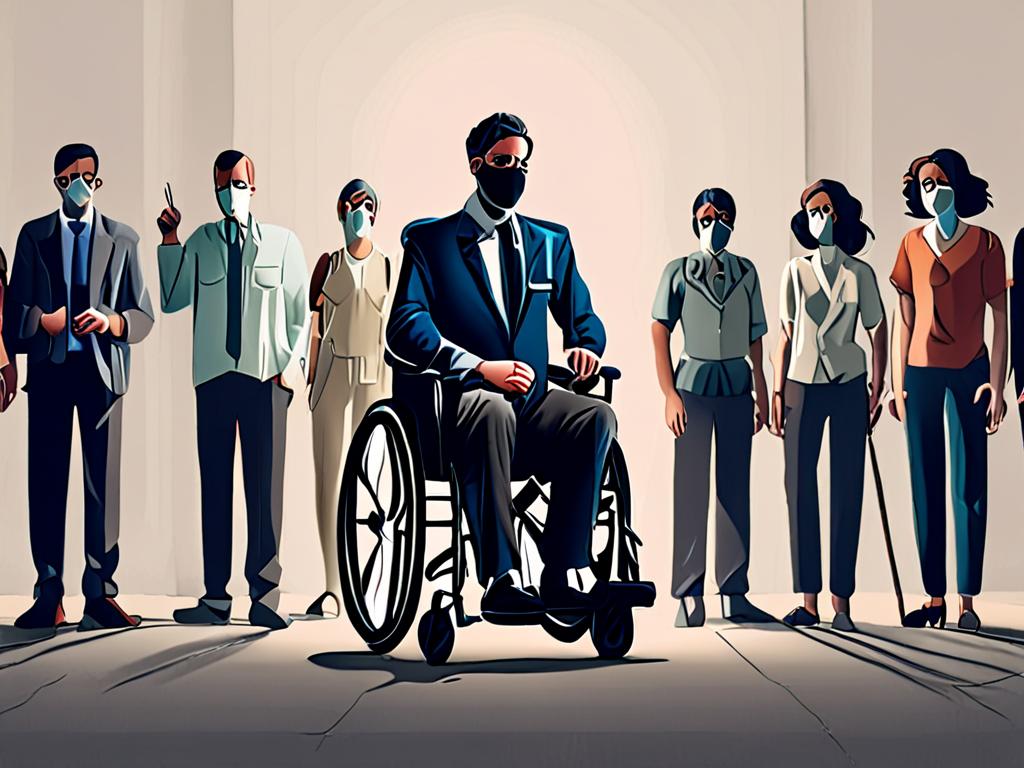
The unprecedented global health crisis of recent years tore through societies, exposing fault lines and vulnerabilities that had long existed beneath the surface. While the pandemic impacted everyone, its repercussions were felt most acutely by marginalized communities. For disabled individuals, the crisis didn’t merely introduce new challenges; it amplified pre-existing systemic inequities, bringing into stark relief the urgent need for a framework rooted in disability justice. But what does disability justice truly entail during such a profound societal disruption? It is far more than just ensuring accessibility; it is about fundamentally valuing disabled lives, ensuring equitable access to critical resources, and centering disabled voices in every aspect of crisis response, recovery, and future preparedness.
Before delving into the specifics of a pandemic response, it’s crucial to acknowledge the landscape that existed prior. Disabled people routinely faced barriers in healthcare, employment, education, and social participation. Information was often inaccessible, public spaces exclusionary, and societal attitudes frequently underpinned by ableism. When the pandemic hit, these pre-existing conditions created a perfect storm, transforming general public health challenges into existential threats for many disabled individuals. Concerns over healthcare rationing, the sudden disappearance of essential support services, and profound social isolation became immediate and widespread.
## Pillars of Disability Justice in a Pandemic
Achieving disability justice during a pandemic demands a multi-faceted approach, built upon principles of equity, inclusion, and the recognition of inherent human dignity.
### Equitable Access to Healthcare and Life-Saving Resources
One of the most distressing aspects of the early pandemic was the emergence of triage protocols that, intentionally or not, devalued the lives of disabled individuals.
* **Challenging Discriminatory Triage:** Many initial hospital guidelines for allocating scarce resources like ventilators or ICU beds either implicitly or explicitly considered factors such as “quality of life,” “long-term prognosis,” or “pre-existing conditions” – criteria that disproportionately affected disabled people. Disability justice demands explicit anti-discrimination policies, ensuring that disability itself is never a basis for denying life-saving care. Medical decisions must be based on individual clinical need, not on ableist assumptions about a person’s worth or future potential.
* **Accessible Public Health Information:** Crucial information regarding virus transmission, prevention, testing, and vaccination was often disseminated in formats inaccessible to many. Websites lacked screen-reader compatibility, official briefings rarely included American Sign Language (ASL) interpreters or plain language summaries, and complex medical jargon permeated public announcements. A justice-oriented approach mandates that all public health information be immediately available in multiple accessible formats, including ASL, large print, braille, plain language, and audio descriptions, and disseminated through diverse channels to reach everyone.
* **Proactive Support for At-Risk Communities:** Many disabled individuals are immunocompromised or have underlying health conditions that place them at higher risk for severe COVID-19. Disability justice requires proactive measures such as prioritizing vaccine access for these groups, ensuring the provision of high-quality personal protective equipment (PPE), and maintaining continuity of essential home-based care and support services. The disruption of these services can be as life-threatening as the virus itself.
### Centering Disabled Voices in Policy and Planning
The foundational principle of “nothing about us without us” becomes even more critical during a crisis. Disabled people are the experts in their own lived experiences and needs.
* **Co-designing Solutions:** Policies designed *for* disabled people, without their active involvement, often miss the mark or create new barriers. Disability justice during a pandemic means establishing advisory councils with disabled leaders, advocates, and community members,