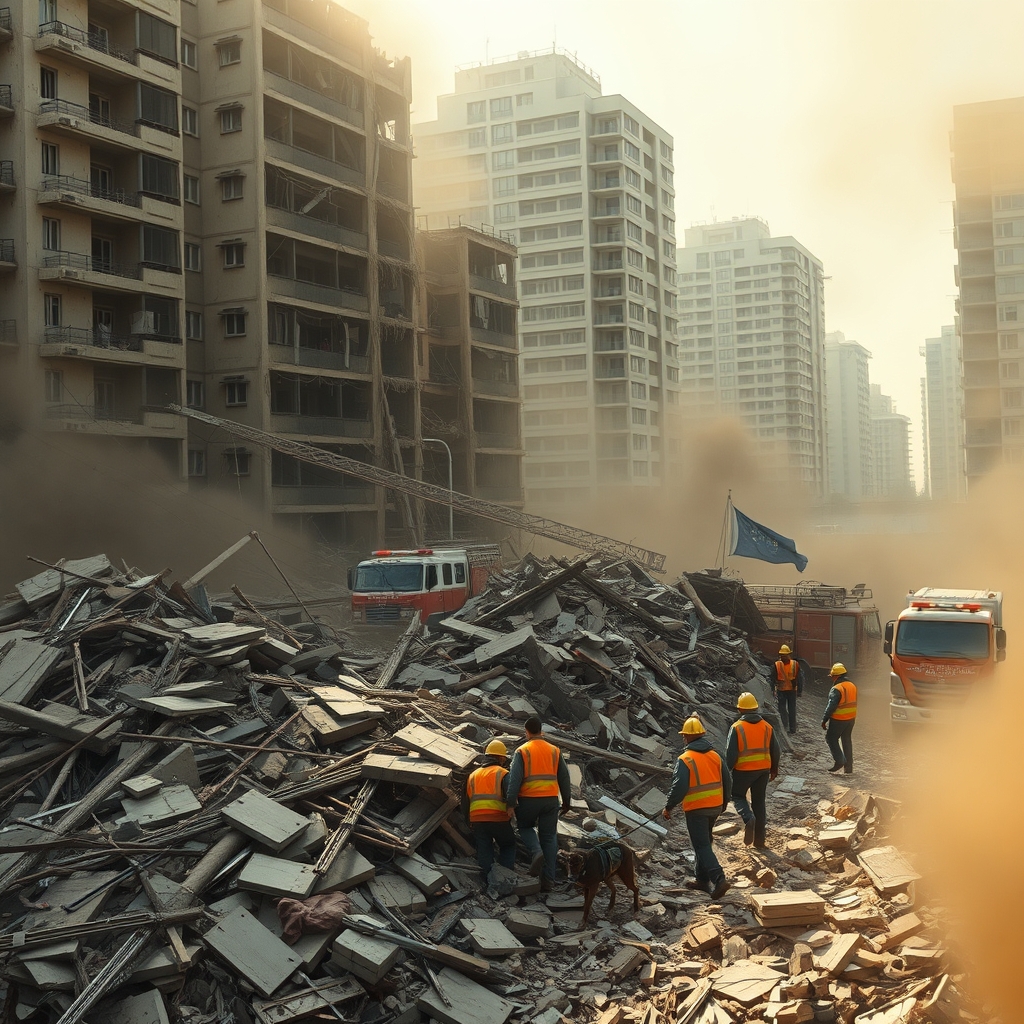
The earth shudders, a deafening roar rips through the air, and then, an agonizing silence broken only by the crunch of collapsing concrete and the distant wail of sirens. This isn’t a scene from a fictional drama; it’s the stark reality that confronts communities caught in the crosshairs of conflict, as tragically demonstrated by the recent building collapse following an Iranian missile strike on Israel. Such events leave an indelible scar, not just on the landscape, but on the very soul of a people.
When a missile strikes, the immediate aftermath is a terrifying ballet of chaos and desperate hope. Dust chokes the air, obscuring the full extent of the devastation, while emergency services race against time to pull survivors from the twisted metal and pulverized stone. Every piece of rubble tells a story of a life interrupted, a home shattered, a routine violently brought to an end.
The Immediate Aftermath: A Scene of Devastation
The site of a building collapse is a stark tableau of destruction. Walls that once stood strong now lie in fragmented heaps, furniture is splintered, and personal belongings are scattered, imbued with the dust of tragedy. Rescuers, often volunteers alongside professional teams, navigate precarious piles, their calls for survivors echoing through the eerie quiet.
This immediate period is critical, fraught with peril for both those trapped and those attempting to save them. The air hangs heavy with the smell of smoke and pulverized materials, a visceral reminder of the destructive power unleashed. Each moment is a race against dwindling oxygen and the threat of further structural instability.
Beyond the Rubble: The Human Cost of Aerial Assaults
While the physical damage is undeniable, the true cost of an aerial assault extends far beyond the visible destruction. Entire families are displaced overnight, their sense of security irrevocably shattered. Children witness scenes no child ever should, carrying the trauma into their formative years.
The psychological impact is profound and long-lasting. Survivors grapple with shock, grief, and often, survivor’s guilt. The constant threat of future attacks creates an atmosphere of pervasive anxiety, making simple acts like sleeping soundly or sending children to school fraught with unspoken fears. These invisible wounds are often the hardest to heal.
Community Rises: Resilience in the Face of Adversity
Yet, amidst such profound sorrow, the human spirit often shines brightest. In the wake of an Iranian missile strike, communities frequently demonstrate incredible resilience and solidarity. Neighbors open their homes, strangers offer comfort, and local organizations quickly mobilize to provide aid, food, and shelter.
This collective response, born from shared experience and empathy, becomes a powerful force for healing. It’s a testament to the enduring strength of people who, despite facing unimaginable loss, refuse to be defined solely by the destruction. The act of rebuilding, both physically and emotionally, begins with these small, yet monumental, acts of kindness.
The Path Forward: Reconstruction and Recovery Efforts
The journey from devastation to recovery is arduous and complex. Reconstruction efforts require immense resources, meticulous planning, and unwavering determination. Beyond clearing debris and laying new foundations, there’s the monumental task of rebuilding lives, livelihoods, and the social fabric of affected areas.
International support and humanitarian aid play a crucial role in these long-term recovery phases. Providing mental health services, educational support for displaced children, and economic assistance for those who have lost everything are vital components of a comprehensive healing strategy. It’s a commitment that stretches years, not just weeks or months.
The echoes of conflict resonate far beyond the initial blast, reminding us of the fragility of peace and the profound impact of geopolitical tensions on everyday lives. Understanding the immediate and lasting consequences of events like a building collapse after a missile strike compels us to recognize the urgent need for stability and humanitarian consideration in all global discussions. By supporting affected communities and advocating for peaceful resolutions, we contribute to a future where such tragedies become a distant memory rather than a recurring nightmare.