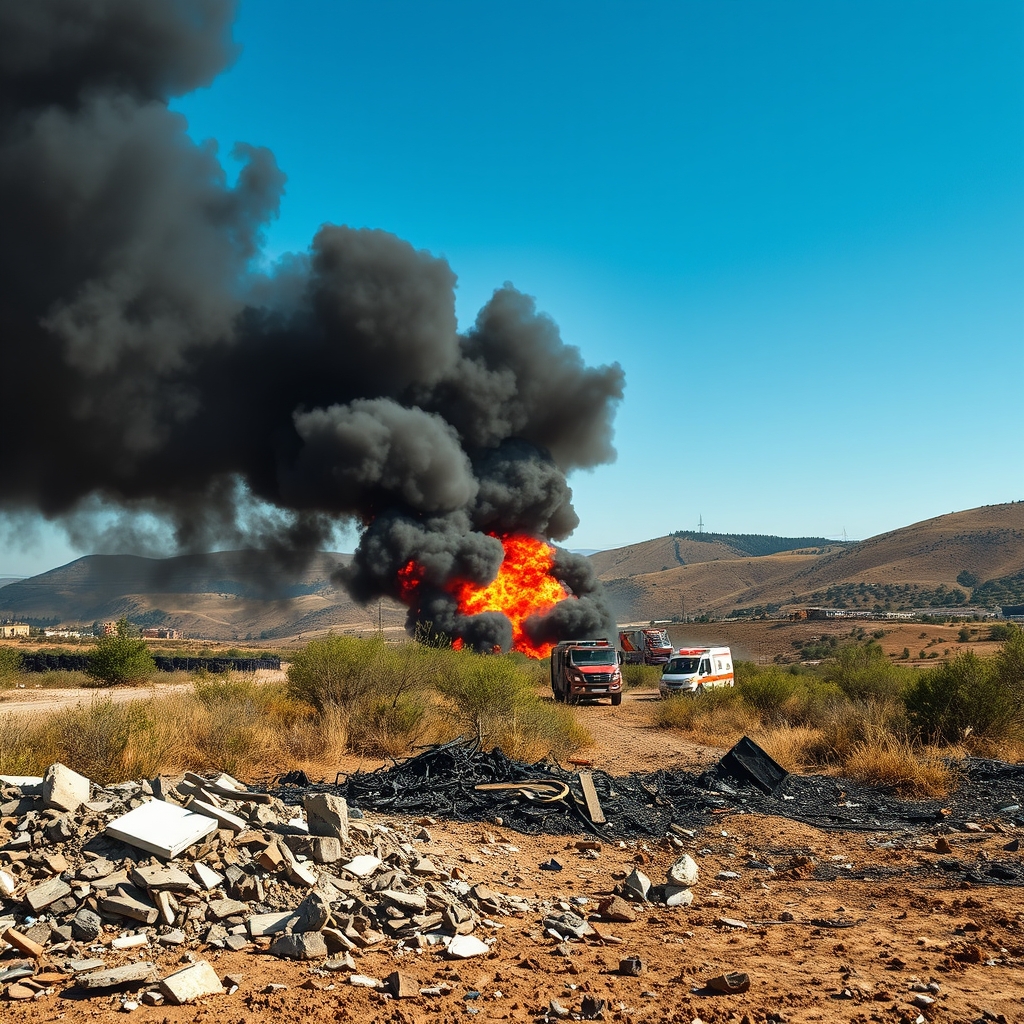
The sudden, jarring sound ripped through the tranquil morning, a violent interruption to the rhythms of daily life. In the quiet communities nestled along Israel’s northern border, a familiar dread instantly seized hearts as the unmistakable roar of a projectile echoed across the landscape. Moments later, the sky above transformed into a canvas of chaos, painted with plumes of black smoke and the orange flicker of flames, marking the devastating impact of a cross-border incident that claimed at least one innocent life.
This wasn’t merely a headline; it was a rupture in the fabric of a community, a stark reminder of the ever-present fragility of peace in a region perpetually on edge. For those who call northern Israel home, such events are not distant news reports but deeply personal experiences, etched into memory with every siren, every distant explosion. The immediate aftermath of this particular attack, witnessed through the lens of video capturing the inferno, underscored the brutal reality faced by residents living under the shadow of persistent regional tensions.
The Immediate Aftermath: Chaos and Courage on the Northern Border
In the wake of the projectile’s impact, a desperate scramble ensued. The initial shock gave way to a flurry of coordinated action, as emergency services raced against time and the spreading flames. Sirens wailed, piercing the air with an urgency that spoke volumes about the gravity of the situation, guiding first responders towards the heart of the unfolding tragedy.
Firefighters, paramedics, and security forces converged on the scene, their training and resolve immediately put to the test. They navigated through the smoke and debris, their focus unwavering as they searched for survivors amidst the wreckage. The air hung heavy with the acrid smell of burning, a grim testament to the destructive power unleashed upon the land.
Volunteers from local emergency organizations, deeply ingrained in the fabric of these close-knit communities, also sprang into action. They provided immediate assistance, comforted those in shock, and helped evacuate residents from areas deemed unsafe. This collective response, born of necessity and a profound sense of mutual aid, highlights the extraordinary resilience embedded within these border towns.
As the flames were brought under control and the immediate danger assessed, the full weight of the loss began to settle. The discovery of a fatality transformed the incident from a generalized threat into a deeply personal tragedy for a family and an entire community. This human cost serves as a stark reminder of the devastating impact of cross-border violence.
First Responders: Guardians in the Face of Adversity
The men and women who serve as first responders in northern Israel operate under unique and demanding circumstances. They are not only professionals but often neighbors and friends, called upon to confront danger in their own backyards. Their courage in rushing towards peril, even as others seek shelter, is a testament to their unwavering commitment.
Their work extends beyond immediate rescue and medical aid; they are also crucial in managing the psychological fallout. Providing reassurance, offering a steady presence amidst chaos, and facilitating communication are all vital aspects of their multifaceted role. In moments of crisis, their presence offers a fragile but essential sense of order.
The scenes of black smoke and flames, while visually dramatic, represent only a fraction of the challenges these teams face. They contend with secondary explosions, potential ambushes, and the emotional toll of witnessing human suffering firsthand. Yet, they continue to serve, embodying the unwavering spirit of protection and care that defines these communities.
Every cross-border incident, no matter its scale, reinforces the critical importance of these dedicated individuals. They are the frontline of defense and recovery, a vital human shield against the unpredictable nature of regional conflict. Their sacrifices and tireless efforts often go unsung, yet they are the bedrock upon which these border communities rely.
A Community Under Siege: Life in Northern Israel
Living in northern Israel, particularly in the towns and villages directly adjacent to the Lebanese border, means existing in a perpetual state of heightened awareness. The beauty of the landscape—rolling hills, lush valleys, and ancient olive groves—is often juxtaposed with the stark reality of security threats. Residents learn to navigate this duality from a young age.
Children grow up familiar with the sound of air raid sirens, learning drills for seeking shelter as instinctively as they learn to read and write. Public buildings, schools, and even private homes are often equipped with reinforced safe rooms, a constant physical manifestation of the underlying tension. This preparedness is not born of paranoia, but of necessity honed by decades of experience.
Yet, despite the ever-present shadow of potential conflict, life here is far from defined solely by fear. Communities thrive, businesses operate, and families raise their children with a fierce determination to maintain normalcy. There is a profound sense of solidarity, a shared understanding that binds neighbors together in a unique and powerful way.
Every cross-border shelling, every rocket attack, tests this resilience, but it rarely breaks it. Instead, it often reinforces the bonds, strengthening the resolve to stay, to rebuild, and to continue the rhythms of life. This steadfastness is a remarkable testament to the human spirit in the face of persistent adversity, a quiet defiance against those who seek to disrupt their peace.
The Rhythm of Preparedness: Adapting to the Threat
For residents along the northern border, preparedness is not an occasional exercise but an integral part of daily life. Regular drills are conducted in schools and workplaces, ensuring everyone knows how to react when the alarm sounds. These practices, while unsettling, instill a crucial sense of readiness and reduce panic during actual emergencies.
The constant vigilance required can be mentally exhausting, a low hum of anxiety that underlies even the most mundane activities. Parents often make choices about where to live, where to send their children to school, and even where to shop, factoring in the proximity and availability of shelters. This strategic living is a unique burden borne by these communities.
Despite these challenges, there’s an undeniable sense of pride and belonging among those who choose to remain. They are the guardians of the border, the living embodiment of a nation’s commitment to its northern frontier. Their presence is a statement, a quiet declaration that life will continue, even in the face of formidable threats.
This adaptation extends to the very infrastructure of their towns. Roads are built with strategic access in mind, and public spaces are designed to offer quick routes to safety. It’s a landscape sculpted not just by nature, but by the ongoing need for security, a constant interplay between the desire for peace and the reality of potential conflict.
The Shadow of History: Understanding Regional Tensions
The recent cross-border incident in northern Israel is not an isolated event but a recurring manifestation of deep-seated regional tensions. The border with Lebanon has historically been a flashpoint, marked by periods of intense conflict interspersed with uneasy truces. Understanding this historical context is crucial to grasping the complexities of the current situation.
For decades, the region has been impacted by geopolitical struggles, proxy conflicts, and the ambitions of various state and non-state actors. Groups like Hezbollah, deeply entrenched in southern Lebanon, play a significant role in this dynamic, often acting as a proxy force with its own agenda, capable of launching projectiles and initiating hostilities.
The broader Middle East landscape, particularly the ongoing conflict in Gaza, often spills over into other fronts. Incidents along the northern border can be direct retaliations, strategic diversions, or attempts to escalate tensions for wider political gains. This interconnectedness means that local events often have far-reaching implications.
The cycle of violence, where an attack leads to retaliation, which in turn provokes further aggression, is a tragic pattern that has plagued the region for generations. Breaking this cycle requires not only military deterrence but also concerted diplomatic efforts and a genuine commitment to de-escalation from all parties involved, a goal that often remains elusive.
Geopolitical Undercurrents: The Broader Picture
The geopolitical forces at play in the Levant are intricate and multifaceted, involving a web of alliances, rivalries, and ideological clashes. Major regional powers often vie for influence, using various groups and territories as leverage in their broader strategic objectives. This complex tapestry makes any localized incident a potential trigger for wider escalation.
The presence of various armed factions, each with its own motivations and external backing, further complicates the security landscape. These groups often operate outside conventional state control, making accountability and de-escalation challenging. Their actions can quickly draw in national armies, leading to larger and more destructive confrontations.
International efforts to mediate and stabilize the region have met with limited success, often hampered by entrenched positions and a lack of trust. UN peacekeeping forces, while present, have a limited mandate and often struggle to prevent incidents in such a volatile environment. The path to lasting peace remains fraught with obstacles.
Therefore, any discussion of a projectile from Lebanon impacting northern Israel must acknowledge these deeper historical and geopolitical currents. It is a symptom of a much larger, ongoing struggle, a poignant reminder of the human cost exacted by unresolved conflicts and the constant interplay of power dynamics in a highly sensitive part of the world.
Beyond the Headlines: The Human Cost of Conflict
While news reports often focus on the immediate facts—the number of casualties, the extent of damage, the political rhetoric—they can rarely convey the profound human cost of such incidents. The loss of a single life in a northern Israel attack ripples through an entire community, leaving an indelible mark of grief and trauma.
Families are shattered, futures are irrevocably altered, and the sense of security, already fragile, is further eroded. The psychological impact extends far beyond those directly affected, touching neighbors, friends, and even those who only hear the distant sounds of conflict. Fear, anxiety, and a pervasive sense of vulnerability become unwelcome companions.
Children, particularly susceptible to such traumas, may exhibit long-term emotional and behavioral challenges. The constant exposure to violence, even indirectly, can disrupt their development and instill a deep-seated apprehension about their surroundings. Providing adequate psychological support is a critical, yet often overlooked, aspect of post-crisis recovery.
Moreover, the disruption to daily life—schools closing, businesses struggling, agricultural work halted—has significant economic and social repercussions. These communities, often reliant on tourism or farming, face immediate financial hardship, exacerbating the emotional strain. The true cost of conflict is therefore multidimensional, impacting every facet of existence.
Living with the Scars: Trauma and Recovery
The visible scars of a projectile strike, like charred earth and damaged buildings, are often easier to address than the invisible wounds it inflicts. Psychological trauma can manifest in various ways, from sleep disturbances and heightened anxiety to depression and post-traumatic stress disorder. Healing from these wounds is a long and arduous journey.
Support networks, both formal and informal, play a crucial role in this recovery process. Mental health professionals provide counseling and therapy, while community leaders and religious figures offer solace and guidance. The shared experience of adversity often fosters a powerful sense of empathy and mutual support among residents.
For many, finding meaning or purpose in the aftermath of such a tragedy becomes a way to cope. This might involve advocating for peace, volunteering to help others, or simply redoubling efforts to rebuild and return to normalcy. Such acts of defiance against despair are powerful demonstrations of human resilience.
Ultimately, the human cost of conflict is immeasurable. It is measured not just in lives lost or property destroyed, but in the erosion of innocence, the burden of fear, and the long, difficult road to psychological recovery. Recognizing and addressing these deeper wounds is essential for any community striving to heal and move forward.
Rebuilding and Resiliency: The Spirit of the North
Amidst the smoke and sorrow, the spirit of northern Israel shines through with remarkable resilience. Immediately after an attack, the focus shifts from the devastation to the meticulous process of rebuilding. This isn’t just about repairing physical structures; it’s about restoring a sense of safety and continuity for the residents.
Community leaders, local authorities, and national agencies work in tandem to assess damage, provide temporary housing, and offer financial aid to those affected. The speed and efficiency of these efforts are often a source of pride, reflecting a deep commitment to ensuring that no one is left behind in the wake of such an incident.
Volunteers pour in from across the country, offering practical help, emotional support, and a visible demonstration of national solidarity. They assist with clearing debris, making repairs, and simply being a comforting presence for those grappling with loss and disruption. This outpouring of support reinforces the strong communal bonds that define Israeli society.
The determination to rebuild is not merely a practical necessity; it is an act of defiance. It sends a clear message that terror will not triumph, that life will continue, and that the vibrant communities along the border will not be displaced or silenced. This unwavering resolve is a powerful testament to the enduring spirit of the people.
Acts of Hope: Cultivating Normalcy
Beyond the immediate rebuilding, there is a constant effort to cultivate and maintain normalcy. Schools reopen as quickly as possible, local businesses resume operations, and community events are planned to bring people together. These acts, though seemingly small, are crucial for psychological recovery and for reaffirming the continuity of life.
Agricultural workers return to their fields, tending to crops and livestock, symbols of life and sustenance that defy the barrenness of destruction. Cultural activities, sports events, and festivals are organized to provide outlets for joy and connection, reminding residents of the richness of their lives beyond the shadow of conflict.
Innovation also plays a role in bolstering resilience. New technologies for early warning systems, improved protective infrastructure, and advanced medical response capabilities are continuously developed and implemented. These advancements, born from necessity, contribute to a greater sense of security and preparedness.
The resilience of northern Israel is not a passive endurance but an active, vibrant force. It is the collective will of individuals and communities to not only survive but to thrive, to find strength in unity, and to continuously strive for a future where the sounds of life overpower the echoes of conflict. Their unwavering commitment to their homes and their heritage is truly inspiring.
A Call for Stability: Paths Towards Peace
Each cross-border incident, like the recent projectile from Lebanon, serves as a harsh reminder of the urgent need for lasting stability in the region. While immediate responses focus on security and recovery, the long-term aspiration remains a future free from such violence. Achieving this requires a multifaceted approach that addresses both the symptoms and the root causes of conflict.
Diplomatic efforts are paramount, requiring sustained engagement from all regional and international actors. Open channels of communication, even between adversaries, are essential for de-escalation and for preventing misunderstandings from spiraling into wider confrontations. The pursuit of dialogue, however challenging, is the only viable alternative to perpetual conflict.
Investing in the economic and social well-being of all communities in the region can also contribute significantly to stability. Poverty and lack of opportunity often fuel resentment and radicalization, making populations more susceptible to the influence of extremist groups. Sustainable development can foster hope and create a greater stake in peace.
Ultimately, true peace requires a fundamental shift in mindset, a willingness to recognize the shared humanity of all people and to prioritize coexistence over confrontation. It demands courageous leadership willing to make difficult compromises and to steer away from cycles of retribution towards a path of mutual respect and understanding.
The events in northern Israel underscore the imperative for such a future. While the resilience of these communities is undeniable, they should not be condemned to a perpetual state of vigilance and recovery. The world must continue to press for solutions that bring genuine security and enduring peace to a region that has suffered for far too long. Every life lost is a powerful testament to the urgent need for a different path, one where the flames of conflict are finally extinguished, and the smoke clears to reveal a horizon of hope for all.