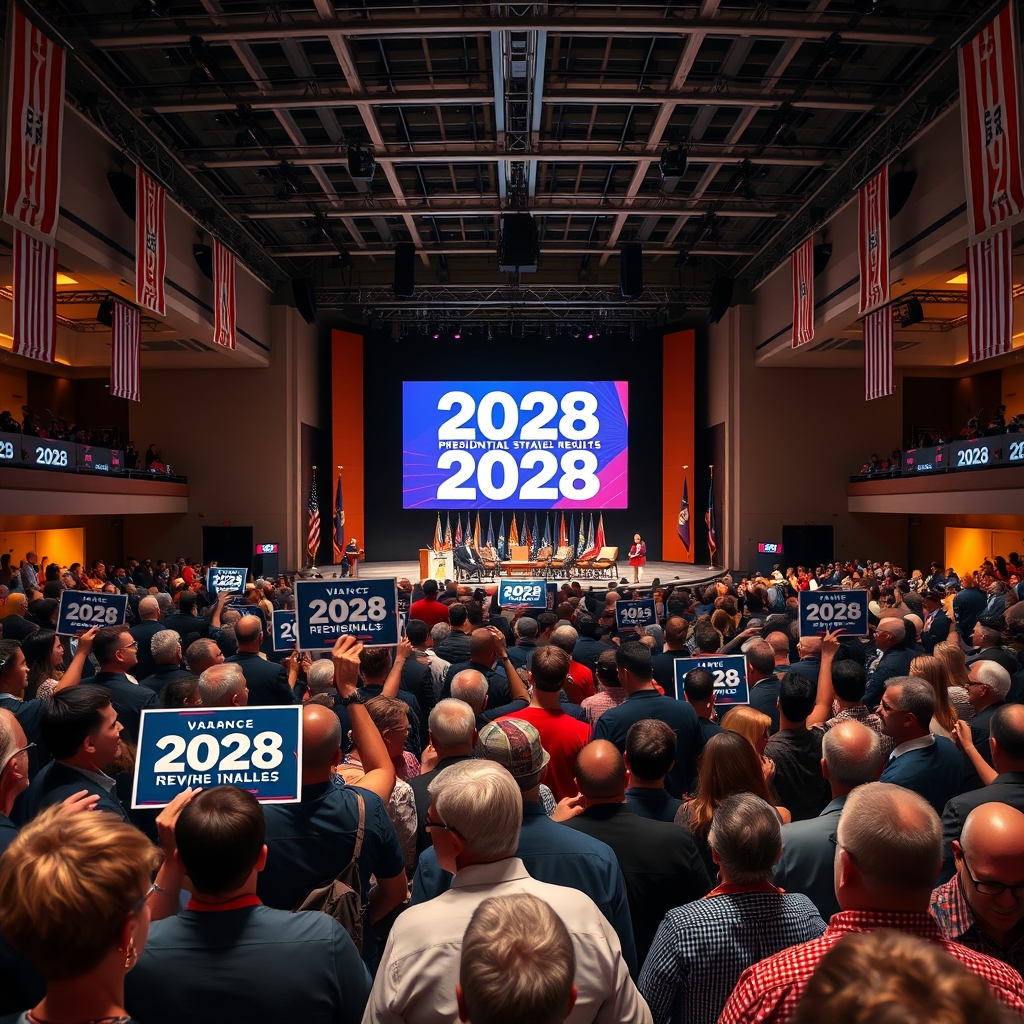
The political landscape is a constantly shifting tapestry, and nowhere is this more evident than in the early, informal contests that hint at future leadership. At the heart of conservative thought, the annual Conservative Political Action Conference (CPAC) often serves as an initial litmus test for presidential ambitions, offering a fascinating glimpse into the grassroots sentiment. This year, the results of the **CPAC 2028 straw poll** have sent ripples through Washington, signaling potential new directions for the Republican Party and the broader conservative movement. It’s a moment that sparks both speculation and strategic recalculations, as the race for the White House, though years away, has already begun in the minds of many.
The Enduring Allure of the CPAC Straw Poll
For decades, the CPAC straw poll has been a peculiar, yet often insightful, tradition. While by no means a definitive predictor of future electoral success, it acts as a significant barometer of enthusiasm among the party’s most active and dedicated base. It’s where emerging figures can test their appeal, and established leaders can reaffirm their standing.
This informal survey, conducted among conservative activists and attendees, provides an early snapshot of who resonates most strongly with the movement’s core. It reflects not just policy preferences, but also the desired temperament and vision for the party’s future. Understanding its nuances is key to grasping the evolving dynamics of conservative politics.
JD Vance’s Unexpected Triumph: A Glimpse into 2028
The headline news from this year’s straw poll was undoubtedly the commanding victory of Vice President JD Vance. His topping the poll for the 2028 presidential nomination marks a significant moment, cementing his status as a formidable contender within the Republican Party. Vance’s appeal appears to stem from a potent combination of his intellectual grounding and his ability to articulate a populist, working-class conservative message.
His narrative, moving from a self-described outsider to a key figure in national politics, resonates deeply with a segment of the electorate seeking authentic leadership. This victory at CPAC suggests that his brand of conservatism, which often emphasizes economic nationalism, a skepticism towards globalism, and a focus on domestic industrial strength, is gaining considerable traction. It positions him as a leading voice in defining the post-Trump era for the GOP.
Vance’s ascent is not merely about personality; it’s about a philosophical alignment with a significant wing of the conservative base. His policy stances on trade, technology regulation, and cultural issues have consistently mirrored the evolving priorities of many CPAC attendees. This win underscores a desire among these activists for a leader who can effectively champion these causes on a national stage, potentially reshaping the Republican platform for years to come.
Marco Rubio’s Strategic Ascent: A Consistent Force
While Vance captured the top spot, the notable advances made by Secretary of State Marco Rubio in the same informal poll cannot be overlooked. Rubio, a long-standing figure in Republican politics, has consistently demonstrated resilience and an ability to adapt to the party’s changing currents. His improved showing indicates a strong, enduring appeal that bridges various factions within the conservative movement.
Rubio’s experience on the national and international stage, coupled with his clear articulation of conservative principles, positions him as a seasoned and reliable choice for many. As Secretary of State, his foreign policy expertise and steady hand likely resonate with those who prioritize national security and a strong global presence. This blend of experience and ideological consistency makes him a perpetual force in any future presidential contest.
His ability to connect with both traditional conservatives and those drawn to more populist themes speaks to a broad base of support. Rubio’s strategic positioning within the administration, coupled with his continued engagement on key policy debates, allows him to maintain a high profile. His performance in the CPAC 2028 straw poll suggests that he remains a serious contender, capable of consolidating support as the primary season draws closer.
Decoding the Conservative Pulse: What CPAC Reveals
The results of the CPAC 2028 straw poll offer more than just individual candidate standings; they provide a window into the evolving soul of the conservative movement. Vance’s victory, alongside Rubio’s strong showing, points to a party grappling with its identity in a post-Trump landscape. There’s a clear appetite for leaders who can blend traditional conservative values with a more assertive, nationalist, and often populist economic agenda.
This suggests a desire for figures who are not only articulate but also perceived as fighters for the American working class and cultural conservatives. The emphasis appears to be shifting towards leaders who champion domestic priorities, challenge established norms, and project strength on both the home front and the global stage. This reflects a broader ideological realignment within the GOP.
Furthermore, the poll hints at a pragmatic approach to leadership, where experience in high office, whether as Vice President or Secretary of State, is highly valued. Yet, this experience must be coupled with a compelling vision that speaks directly to the concerns of the conservative base. It’s a complex interplay of established gravitas and fresh, dynamic energy.
Beyond the Headlines: The Road to 2028 Begins Early
While the CPAC 2028 straw poll is an early indicator, the road to the presidency is long and fraught with challenges. The results serve as a wake-up call for other potential contenders, prompting them to refine their messages and strategies. It’s a reminder that the informal campaigning and coalition-building for 2028 are already well underway, far before any official announcements.
The next few years will see intense jockeying for position, as candidates attempt to define themselves and carve out distinct lanes within the Republican Party. Issues such as economic policy, foreign relations, cultural debates, and the future of American leadership will all play critical roles. This informal poll offers a starting point for understanding the current leanings of a crucial segment of the electorate.
Prospective candidates will be scrutinizing these results, looking for clues on how to best appeal to the conservative base. They will need to demonstrate not only ideological purity but also electability and a clear path to victory. The narrative that emerges from CPAC often sets the tone for these early discussions and strategic planning sessions, influencing fundraising and grassroots organizing efforts.
The Shifting Sands of Republican Leadership
The conservative movement is a dynamic entity, constantly adapting to new challenges and opportunities. The strong performances of JD Vance and Marco Rubio in the CPAC 2028 straw poll illustrate the diverse yet converging priorities within the Republican Party. It highlights a desire for leadership that is both principled and pragmatic, capable of navigating complex domestic and international issues.
The party is clearly seeking figures who can articulate a compelling vision for America’s future, one that resonates with the core tenets of conservatism while also addressing modern concerns. This involves a delicate balance of tradition and innovation, appealing to both long-time party loyalists and newer voters drawn to a more populist message. The journey to 2028 will undoubtedly be shaped by these evolving preferences.
As the political calendar progresses, the lessons from CPAC will continue to inform the strategic decisions of those aspiring to lead the nation. For anyone looking to understand the undercurrents shaping the Republican Party’s future, paying close attention to these early signals and the ongoing evolution of conservative thought will be essential. The next few years promise a fascinating period of political redefinition and the emergence of new leadership for a changing America.