
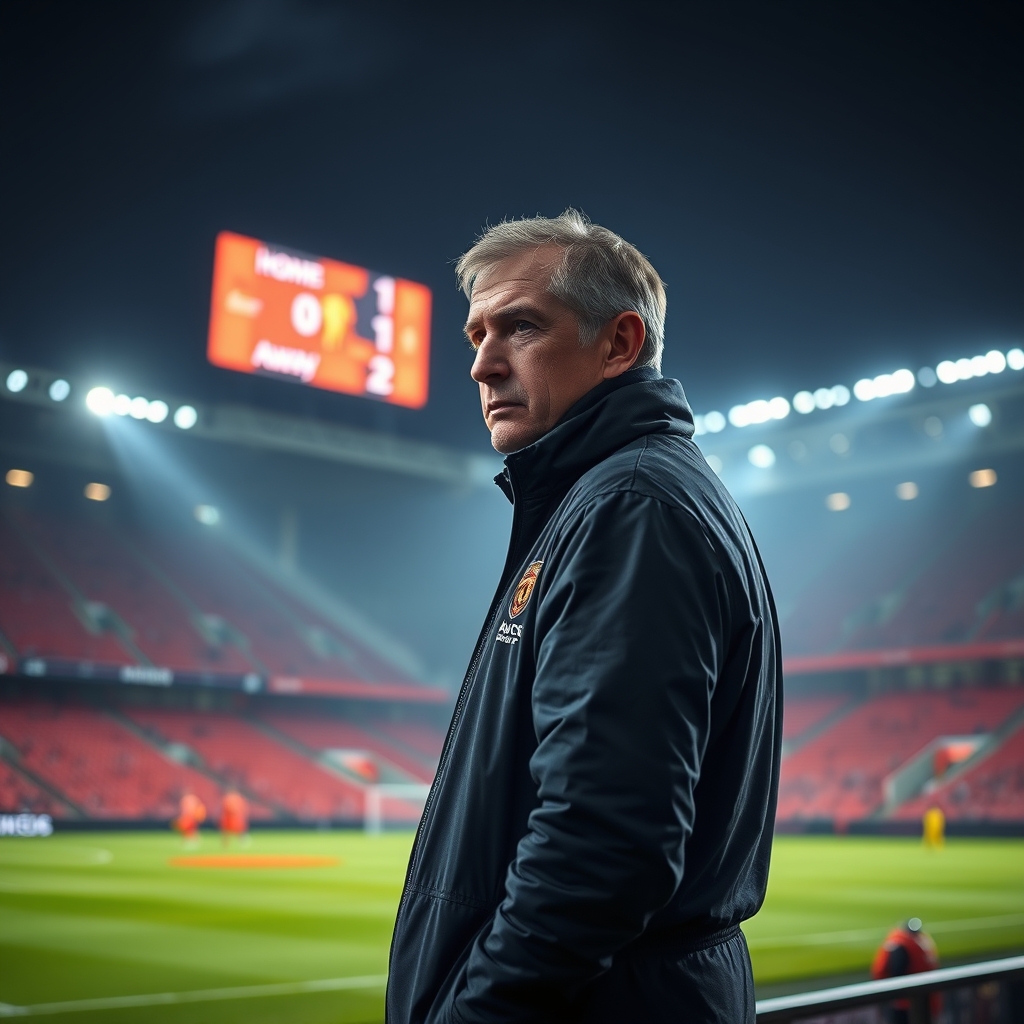
The landscape of elite European football is unforgiving, a realm where ambition is frequently measured against the harsh metrics of performance and outcome. Following a home defeat against Bayern Munich in the Champions League quarter-final, Manchester United manager Marc Skinner’s refusal to ‘rule them out’ presents a fascinating study in resilience, strategic rhetoric, and perhaps, a degree of necessary defiance. This statement, while admirable in its projection of continued belief, invites a precise and critical analysis of its grounding in the current operational reality of the club and the formidable challenge ahead.
The Weight of a Home Defeat
To lose the home leg of a Champions League quarter-final is not merely a setback; it is a significant tactical and psychological disadvantage. Against an opponent of Bayern Munich’s calibre, a team synonymous with European dominance and ruthless efficiency, conceding an advantage on home soil places an immense burden on the return fixture. The initial match is where a team typically aims to establish a foothold, secure a lead, or at minimum, prevent the opponent from gaining a decisive upper hand. When this objective is not met, the narrative shifts from proactive aspiration to reactive damage control.
The immediate implication is clear: Manchester United must now travel to one of Europe’s most intimidating venues and not only win, but win by a margin that overturns the deficit. This is a task that demands exceptional tactical discipline, an elevated level of individual performance across the squad, and a mental fortitude capable of withstanding relentless pressure. Skinner’s declaration, therefore, must be assessed not just as a statement of intent, but as a commitment to achieving an outcome that, statistically and historically, becomes increasingly improbable with each goal conceded at home.
Optimism Versus Pragmatism: Skinner’s Stance
A manager’s role extends beyond tactical instruction; it encompasses the crucial task of maintaining morale and instilling belief, even in the face of adversity. Skinner’s steadfastness in refusing to capitulate on the Champions League dream is, in this regard, a fundamental aspect of leadership. To publicly concede defeat after the first leg would be to undermine the very essence of competitive sport and potentially demoralise the squad ahead of the crucial return fixture.
However, the line between constructive optimism and unrealistic expectation is often thin. For an analytical critic, the question arises: Is this an optimism rooted in tangible, observable improvements and a clear pathway to victory, or is it a rhetorical device designed to manage external perceptions and internal anxieties? While a manager must inspire, the foundation of that inspiration must ultimately be a credible strategy and a demonstrable capacity for execution. Without these, even the most fervent belief can appear as mere rhetoric, failing to resonate with the cold realities of elite-level competition.
The Tactical Imperative for a Turnaround
Overturning a deficit against Bayern Munich necessitates more than just a renewed sense of belief; it demands a profound tactical recalibration. The specifics of the home defeat—the areas exploited by Bayern, the vulnerabilities exposed in United’s setup, and the missed opportunities—must be meticulously dissected. This involves a critical assessment of defensive solidity, midfield control, and, crucially, attacking potency. Against a team like Bayern, half-chances must be converted, and defensive lapses are punished with swift ruthlessness.
The away leg presents a different dynamic. United may find more space on the counter-attack, but they will also face a Bayern side playing with the confidence of a lead and the backing of their home support. Skinner’s challenge is to devise a game plan that not only neutralises Bayern’s strengths but actively exploits any potential weaknesses, all while navigating the psychological pressure of needing to score multiple goals without conceding. This requires a level of tactical ingenuity and player execution that must surpass their performance in the home leg, a significant ask at this stage of the competition.
The Broader Implications for Manchester United’s European Ambition
Manchester United, regardless of the specific team, carries a legacy of high expectations. The Champions League is not merely a competition but a benchmark of a club’s standing at the pinnacle of European football. For United, consistent participation and progression in this tournament are vital for attracting top talent, enhancing commercial appeal, and affirming their status as a global powerhouse. A quarter-final exit, while not a catastrophic failure, underscores the persistent gap that may exist between aspiration and current competitive reality against the very elite.
The ‘dream’ of Champions League glory, therefore, is not just a seasonal hope; it is an ongoing project. Skinner’s statement, in this context, can be viewed as a reaffirmation of this long-term ambition, even if the immediate hurdle appears daunting. It underscores the club’s commitment to competing at the highest level, regardless of temporary setbacks. However, the path to realising this dream is paved with consistent performance, strategic investment, and a ruthless self-assessment that prioritises tangible progress over mere declarations of intent. The current situation serves as a stark reminder that while hope is a powerful motivator, it must ultimately be underpinned by a superior tactical framework and an unwavering capacity for execution when it matters most.