
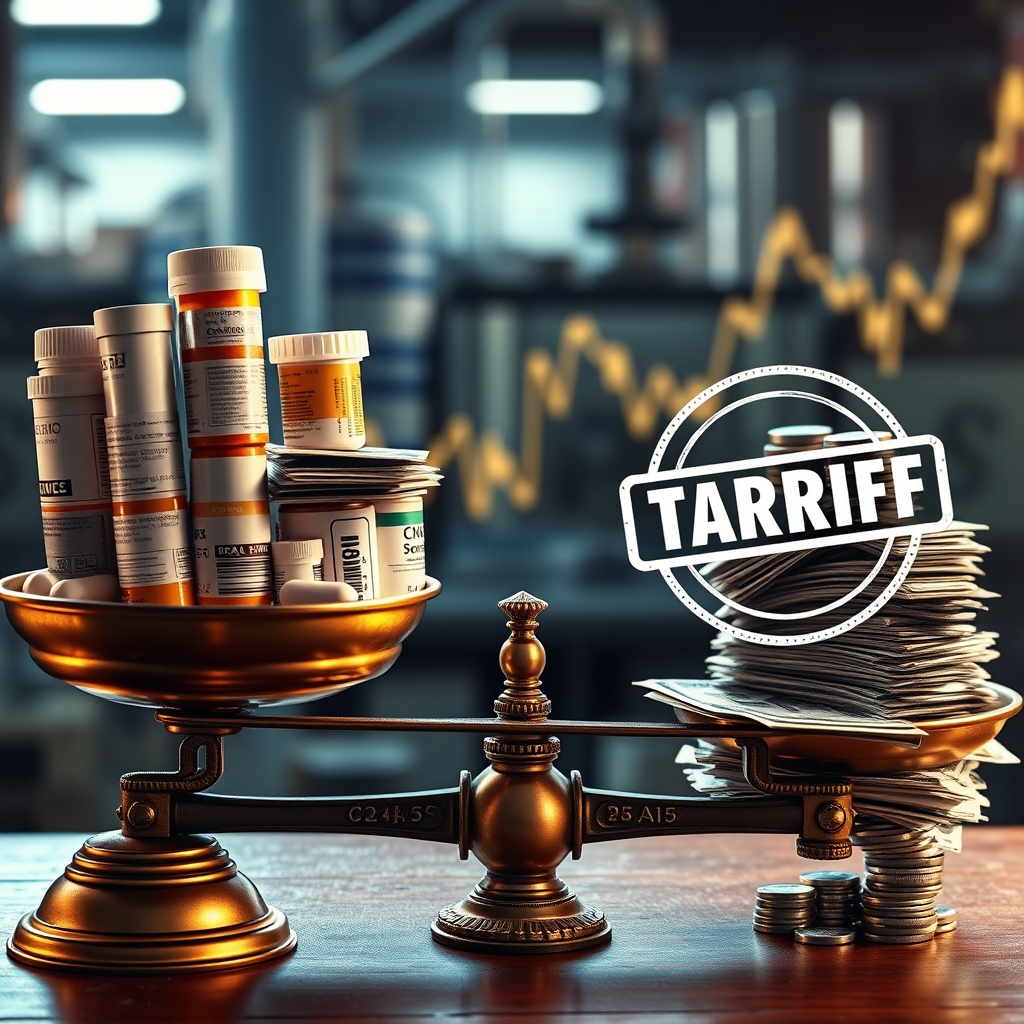
Imagine a world where the cost of life-saving medication is drastically slashed, not by scientific breakthrough, but by a stroke of a pen in a trade negotiation. This isn’t a distant fantasy, but a real policy proposal recently unveiled, suggesting a sweeping 100-percent **pharmaceutical tariff** on imported drugs. The aim? To compel pharmaceutical companies to negotiate lower prices and shift manufacturing back to the United States. This bold move, championed by a former US president, has ignited a fervent debate across the healthcare landscape, leaving many to wonder if such aggressive trade measures could truly be the silver bullet for America’s exorbitant drug prices.
For years, Americans have grappled with some of the highest prescription drug costs in the world. From insulin to cancer treatments, the financial burden placed on patients and families is immense, often leading to impossible choices between vital medication and other necessities. Against this backdrop of desperation and frustration, the idea of leveraging trade policy to force down prices emerges as a compelling, albeit controversial, strategy.
The Unveiling of a Bold Strategy: Tariffs on Pharmaceuticals
The proposal to impose a 100-percent tariff on imported pharmaceutical drugs is a significant escalation of trade tactics, particularly within the sensitive realm of healthcare. This isn’t just about protecting domestic industries; it’s explicitly framed as a direct intervention to address the soaring **medical drug costs** that plague the US healthcare system. The architects of this plan envision a scenario where foreign drug manufacturers, faced with a prohibitive import tax, would have two primary options.
They could either drastically lower their prices to absorb the tariff, thereby making their drugs more affordable for American consumers, or they could choose to relocate their manufacturing operations to the United States. This strategic relocation would, in theory, create jobs domestically and reduce reliance on foreign supply chains, aligning with broader economic nationalism goals. The policy is presented as a powerful bargaining chip, designed to force concessions from an industry often criticized for its opaque pricing practices.
Such a move would represent a dramatic shift in how the US interacts with the global biopharmaceutical sector. Historically, trade agreements have often sought to reduce barriers, not erect such formidable ones, especially for essential goods like medicines. Therefore, this proposal signals a radical departure, prioritizing immediate price reduction and domestic production over traditional free-trade principles in the healthcare sector.
The Rationale: A Prescription for Lower Drug Costs?
At its core, the rationale behind these proposed **drug price tariffs** stems from a deep-seated belief that the current system is broken and that aggressive action is necessary to fix it. Proponents argue that the US, as the world’s largest pharmaceutical market, holds significant leverage that has not been fully utilized. By threatening a complete lockout of foreign-made drugs or making them prohibitively expensive, the US could, theoretically, dictate terms to global pharmaceutical giants.
The argument posits that the financial pressure of a 100-percent tariff would be too great for companies to ignore. Faced with the choice of losing access to a massive market or complying with US demands for lower prices and domestic production, the latter would become the more economically viable path. This approach views tariffs not merely as revenue generators but as powerful coercive tools to reshape market behavior and achieve specific policy objectives related to **drug affordability**.
Furthermore, the policy aims to address concerns about supply chain resilience. The COVID-19 pandemic highlighted vulnerabilities in global supply chains, particularly for essential medical supplies. By incentivizing domestic manufacturing, the tariff proposal seeks to bolster the US’s capacity to produce its own medications, reducing dependence on foreign sources and enhancing national security in times of crisis.
Navigating the Labyrinth of Drug Pricing: Will Tariffs Work?
While the stated goals of lower **healthcare costs** and increased domestic manufacturing are laudable, the actual mechanics of how a 100-percent pharmaceutical tariff would play out are far more complex and uncertain. Economic theory suggests that tariffs, particularly high ones, are often passed on to consumers in the form of higher prices. If foreign manufacturers choose not to absorb the entire tariff, American patients could end up paying double the original price for their imported medications.
The pharmaceutical supply chain is also incredibly intricate, involving numerous stages from research and development to manufacturing, distribution, and dispensing. Many drugs rely on active pharmaceutical ingredients (APIs) sourced from various countries, even if the final product is assembled elsewhere. A blanket tariff could disrupt this delicate balance, potentially leading to shortages of critical medications if companies struggle to adapt or find alternative suppliers quickly.
Moreover, the pricing of drugs is not solely determined by manufacturing costs or import duties. Factors such as patent protection, market exclusivity, the role of Pharmacy Benefit Managers (PBMs) in negotiations, and the lack of price transparency all contribute to the high **prescription drug costs** in the US. A tariff, while a powerful tool, might only address one piece of a much larger, multi-faceted puzzle, potentially creating new problems without fully solving the existing ones.
The Pharmaceutical Industry’s Apprehension: A Bitter Pill?
Unsurprisingly, the prospect of a 100-percent tariff has been met with significant apprehension from the **biopharmaceutical industry**. Industry leaders and trade associations have voiced concerns that such a drastic measure could have severe unintended consequences, far beyond simply lowering prices. They argue that tariffs could stifle innovation, reduce the availability of new treatments, and ultimately harm patients.
Pharmaceutical companies often invest billions in research and development, a process that is lengthy, risky, and expensive. The potential for a 100-percent import tax could significantly erode profit margins, making it harder to recoup these investments. This, in turn, could disincentivize future R&D, particularly for less common diseases or drugs with smaller market potential, where the financial returns are already tighter.
Furthermore, the industry warns of the risk of retaliatory tariffs from other countries, creating a global trade war that could impact the entire global pharmaceutical market. Such a scenario could disrupt the flow of essential medicines worldwide, making it harder for patients everywhere to access the treatments they need. The industry’s argument centers on the idea that collaboration and market access, rather than protectionism, are key to driving innovation and ensuring global health.
Global Ripple Effects: International Trade and Health Diplomacy
A policy as aggressive as a 100-percent tariff on pharmaceuticals would undoubtedly send significant ripples across the global economy and international relations. Other nations, particularly those with strong pharmaceutical export sectors, would likely view such a move as a protectionist barrier, potentially leading to retaliatory measures. This could manifest as tariffs on American goods or services, creating broader trade disputes that extend beyond just medicines.
The global nature of drug development and manufacturing means that few, if any, countries are entirely self-sufficient in their pharmaceutical needs. Imposing such high import duties could disrupt established supply chains, impacting not only the availability of drugs in the US but also in other countries that rely on those same global networks. This could strain international health diplomacy, as nations seek to protect their own access to vital medications.
Moreover, the proposal raises questions about intellectual property rights and international agreements. Many pharmaceutical innovations are developed through global collaborations and protected by international patents. A tariff-driven push for domestic production could complicate these agreements, potentially leading to disputes over patent infringement or forced technology transfers, further destabilizing the global pharmaceutical landscape.
The Patient’s Perspective: A Promise of Affordability or a Looming Threat?
Ultimately, the success or failure of any healthcare policy is measured by its impact on patients. For individuals struggling to afford life-saving medications, the promise of drastically reduced **drug prices** is incredibly appealing. The hope is that this aggressive trade policy will force pharmaceutical companies to finally make essential treatments accessible without bankrupting families.
However, there’s a significant risk that patients could become collateral damage in a trade war. If foreign manufacturers pull out of the US market or pass on the entire tariff cost, patients might face even higher prices or, worse, find that certain medications are no longer available. Drug shortages, already a concern in the US, could become more frequent and severe, particularly for specialized or less profitable drugs.
The emotional and financial toll of high drug costs is undeniable. While the intent to alleviate this burden is clear, the path chosen carries inherent risks. Patients and patient advocacy groups will be watching closely, hoping for true affordability and access, but also fearing the potential for unintended consequences that could make their already challenging situations even more dire.
A Look Back: Tariffs as a Tool in History
Tariffs are not a new invention; they have been a tool of economic policy for centuries, used to protect domestic industries, generate revenue, or exert political pressure. Historically, their outcomes have been mixed. While some tariffs have successfully spurred domestic growth in specific sectors, others have led to retaliatory measures, trade wars, and increased costs for consumers.
The Smoot-Hawley Tariff Act of 1930, for example, is often cited as a cautionary tale. Imposed during the Great Depression, it raised tariffs on over 20,000 imported goods, prompting other countries to retaliate with their own tariffs. This tit-for-tat trade war is widely considered to have exacerbated the global economic downturn, demonstrating the potential for tariffs to backfire on a grand scale.
While the context of pharmaceutical tariffs is unique, given the essential nature of the goods, historical precedents remind us that trade policy decisions can have far-reaching and often unpredictable consequences. The specific nature of healthcare, where lives are literally on the line, adds an additional layer of complexity and risk to such aggressive economic maneuvers.
Beyond Tariffs: Exploring Other Avenues for Drug Price Reduction
Given the potential volatility of pharmaceutical tariffs, it’s crucial to consider other established and proposed strategies for tackling high **drug costs**. Many experts advocate for a multi-pronged approach that addresses various aspects of the drug pricing ecosystem. One popular proposal involves allowing Medicare to directly negotiate drug prices, similar to practices in many other developed nations.
Other strategies include increasing competition by streamlining the approval process for generic and biosimilar drugs, implementing price caps on certain essential medications, and adopting international reference pricing, where US prices are benchmarked against those in other wealthy nations. Enhancing price transparency across the supply chain, from manufacturers to PBMs, could also empower consumers and payers to make more informed decisions.
These alternative approaches, while perhaps less dramatic than a 100-percent tariff, aim to create sustainable, systemic changes that foster competition, improve negotiation power, and ensure that the value of innovative medicines is balanced with the need for affordability. They represent a different philosophy—one of reform within the existing market structure rather than a disruptive external force.
The Road Ahead: Uncertainty in the Pharmaceutical Landscape
The proposal for a 100-percent pharmaceutical tariff stands as a stark reminder of the intense pressure to address America’s sky-high drug costs. Whether it ultimately proves to be a bold stroke of genius or a perilous gamble remains to be seen. The implementation of such a policy would undoubtedly trigger a seismic shift in the **US pharmaceutical market**, with profound implications for patients, manufacturers, and global trade relations.
The debate surrounding these tariffs underscores the urgent need for comprehensive **healthcare reform** that genuinely prioritizes patient access and affordability. As policymakers weigh these complex decisions, it is imperative for all stakeholders—patients, healthcare providers, industry leaders, and economists—to engage in robust, informed discussions. Understanding the potential benefits and significant risks of such a dramatic policy is crucial for navigating the challenging landscape of drug pricing and ensuring a future where life-saving medicines are truly within reach for everyone.